A painful knee after walking. Persistent back discomfort during office hours. Shoulder stiffness that makes everyday activities difficult. These problems may initially seem minor, but recurring musculoskeletal symptoms can sometimes indicate an underlying orthopedic condition.
Your bones, joints, muscles, tendons, and ligaments work together to support movement and physical stability. When any of these structures become injured or affected by disease, everyday activities can become uncomfortable.
In Dubai, busy working routines, limited physical activity, sports injuries, and prolonged sitting can contribute to different musculoskeletal concerns. However, identifying the actual cause of pain requires more than simply treating the symptoms.
Comprehensive orthopedic tests and clinical assessments help doctors understand the source of discomfort, evaluate physical function, and recommend suitable treatment.
Understanding how orthopedic diagnosis works can help patients recognise when professional evaluation is necessary.
Why Is an Orthopedic Examination Important?
Orthopedic medicine focuses on conditions affecting the musculoskeletal system. This includes bones, joints, muscles, tendons, ligaments, and related structures.
Pain in one area does not always originate from that specific location. For example, discomfort around the shoulder may involve muscles, tendons, or the cervical spine.
Similarly, knee pain can develop due to joint inflammation, cartilage problems, ligament injuries, or other conditions.
An orthopedic examination helps identify possible causes through medical history, physical assessment, and appropriate diagnostic investigations.
Early evaluation can also help prevent certain injuries from worsening and support better treatment planning.
7 Important Orthopedic Tests and Diagnostic Assessments
1. Physical Examination
A physical examination is usually the first step in orthopedic diagnosis.
The doctor reviews the patient’s symptoms, medical history, previous injuries, and daily physical activities.
The examination may include:
- Checking painful or swollen areas.
- Evaluating joint movement.
- Assessing muscle strength.
- Examining posture and alignment.
- Identifying tenderness and inflammation.
- Observing walking and movement patterns.
These findings help the orthopedic specialist understand which structures may be affected and whether further investigations are necessary.
2. Digital X-Ray Examination
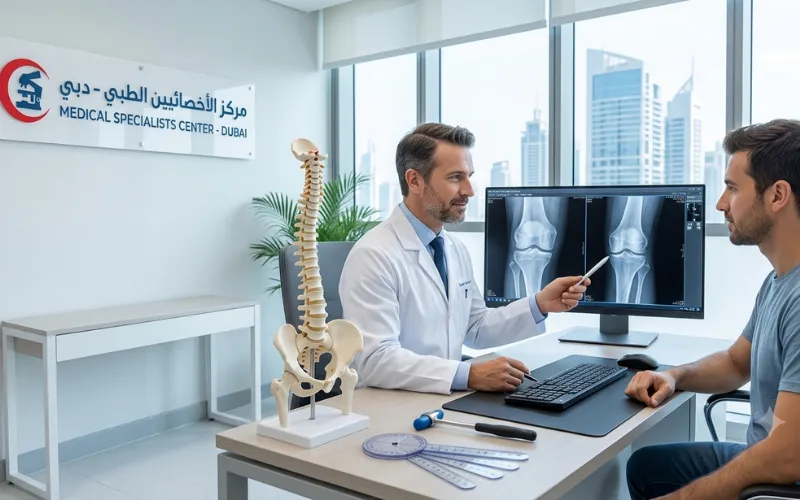
Digital X-rays are commonly used to evaluate bones and certain joint conditions.
They produce images that help doctors identify fractures, bone alignment problems, joint-space changes, and some signs of arthritis.
An X-ray may be recommended following an injury or when persistent joint pain requires further investigation.
For example, patients experiencing knee pain may undergo X-ray examination to assess bone structure and possible degenerative changes.
However, X-rays do not provide detailed images of every soft tissue structure.
3. MRI Scan Referral
Magnetic Resonance Imaging (MRI) uses magnetic fields and radio waves to create detailed images of internal body structures.
It is particularly useful for evaluating soft tissues that may not be clearly visible on conventional X-rays.
An MRI may help investigate:
- Ligament injuries.
- Meniscus tears.
- Herniated spinal discs.
- Tendon damage.
- Cartilage abnormalities.
- Certain bone and joint conditions.
Doctors generally recommend MRI when clinical findings suggest that additional information is necessary.
It is not required for every case of back, knee, or shoulder pain.
4. CT Scan Referral
Computed Tomography (CT) uses X-rays and computer processing to produce detailed cross-sectional images.
It provides useful information about complex bone structures and certain fractures.
A CT scan may be recommended when doctors need a clearer understanding of:
- Complex fractures.
- Joint bone abnormalities.
- Bone alignment.
- Certain spinal conditions.
- Detailed bone anatomy before surgery.
Unlike MRI, CT uses ionising radiation. Therefore, doctors consider its benefits and potential risks before recommending the examination.
5. Bone and Joint Evaluation
Bones and joints provide structural support and allow the body to perform different movements.
An orthopedic evaluation may focus on joint stability, alignment, swelling, tenderness, and signs of degeneration.
Common conditions assessed include:
- Osteoarthritis.
- Joint stiffness.
- Shoulder and hip disorders.
- Knee joint problems.
- Bone injuries.
- Joint inflammation.
A combination of clinical examination and appropriate imaging helps determine the condition affecting the joint.
6. Sports Injury Assessment
Sports injuries can involve muscles, tendons, ligaments, bones, and joints.
They may develop suddenly during physical activity or gradually through repetitive movements.
An orthopedic sports injury assessment may evaluate:
- Muscle strains.
- Ligament sprains.
- Tendon injuries.
- Knee injuries.
- Shoulder instability.
- Repetitive strain problems.
Doctors may assess movement, strength, joint stability, and the mechanism of injury.
Depending on the findings, additional imaging or rehabilitation may be recommended.
7. Mobility and Functional Assessment
Pain is not the only factor considered during orthopedic evaluation.
A patient’s ability to walk, bend, lift, balance, and perform daily movements also provides useful diagnostic information.
A mobility and functional assessment may examine:
- Range of motion.
- Walking patterns and gait.
- Muscle strength.
- Joint flexibility.
- Physical balance.
- Functional movement limitations.
These findings help doctors understand how an orthopedic condition affects everyday activities.
They can also help establish rehabilitation goals and monitor progress during recovery.
Which Orthopedic Conditions Can These Tests Help Identify?
Different diagnostic approaches can help investigate a wide range of musculoskeletal problems.
Some common conditions include:
Osteoarthritis: A degenerative joint condition that can cause pain, stiffness, and reduced movement.
Herniated Disc: A spinal condition in which disc material protrudes and may irritate nearby nerves.
Ligament Injuries: Damage to the tissues connecting bones, commonly affecting the knees and ankles.
Fractures: Breaks or cracks in bones resulting from accidents, falls, or other physical injuries.
Tendon Problems: Conditions such as tendinitis and tendon tears that can affect movement and strength.
Sports Injuries: Physical damage involving muscles, joints, tendons, or ligaments during exercise and athletic activities.
Identifying the underlying condition is essential because different problems may produce similar symptoms but require different treatments.
When Should You Visit an Orthopedic Doctor?
Occasional muscle soreness after physical activity may improve with appropriate rest. However, recurring or unexplained pain deserves medical attention.
Consider arranging an orthopedic consultation if you experience:
- Persistent back or neck pain.
- Repeated knee or shoulder discomfort.
- Joint swelling or stiffness.
- Difficulty walking or maintaining balance.
- Pain following a sports injury.
- Reduced joint movement.
- Repeated muscle or ligament injuries.
- Discomfort affecting sleep or everyday activities.
Seek urgent medical attention following a serious injury, particularly when there is visible deformity, an open fracture, severe swelling, or inability to bear weight.
Sudden limb weakness or new loss of bladder or bowel control alongside back pain also requires emergency assessment.
What Happens After an Orthopedic Diagnosis?
Once the underlying condition has been assessed, the orthopedic specialist can recommend an appropriate management plan.
Treatment depends on the diagnosis, symptom severity, medical history, and physical requirements.
Common approaches may include:
Medication: Appropriate medicines may help manage pain and inflammation when clinically indicated.
Physiotherapy: Guided exercises and rehabilitation can improve mobility, strength, and physical function.
Sports Injury Management: Individualised care can support recovery following muscle, tendon, or ligament injuries.
Joint Care: Management strategies may help reduce discomfort and maintain movement in patients with arthritis.
Surgical Consultation: Certain fractures, severe joint problems, or injuries may require consideration of surgical treatment.
Not every orthopedic condition requires surgery. Many musculoskeletal problems can initially be managed through suitable non-surgical approaches.
How Can You Maintain Better Bone and Joint Health?
Healthy daily habits can support musculoskeletal strength and physical function.
Consider incorporating these practices into your routine:
- Participate in regular physical activity.
- Maintain appropriate exercise techniques.
- Avoid sudden increases in workout intensity.
- Maintain a balanced diet.
- Include suitable muscle-strengthening exercises.
- Avoid prolonged inactivity.
- Follow appropriate rehabilitation after injuries.
- Seek medical advice for persistent discomfort.
Consistent movement and appropriate physical conditioning can help maintain joint function and reduce the risk of certain injuries.
Get Comprehensive Orthopedic Care at MSC Dubai
Bone, joint, and muscle problems can affect every part of daily life. Whether you experience recurring back pain, joint stiffness, sports injuries, or difficulty moving comfortably, identifying the underlying cause is an important first step.
At Medical Specialists Center (MSC Dubai), the Orthopedic Department provides comprehensive musculoskeletal assessment and personalised treatment planning.
The department is supported by experienced orthopedic specialists, including:
- Dr. Ehsan Pendar – Orthopedic Surgeon
- Dr. Abulfazl Akbari – MD Orthopedic Surgeon
MSC’s orthopedic diagnostic services include:
- Physical examination.
- Digital X-rays.
- MRI and CT scan referrals.
- Bone and joint evaluation.
- Sports injury assessment.
- Mobility and functional assessment.
Based on the clinical findings, the specialists develop individualised management plans that may include medication, physiotherapy recommendations, joint care, sports injury management, and rehabilitation support.
Whether you are dealing with persistent joint pain, a recent injury, or reduced mobility, professional orthopedic assessment can help determine the appropriate next steps.
Take the first step towards better movement and healthier joints.
Book your orthopedic consultation at MSC Dubai today.
📍 Medical Specialists Center – Al Mina Branch
Dubai Real Estate Centre Building, First Floor – 101, Al Mina Road, next to Capitol Hotel, Dubai.
📞 Call: +971 4 345 4040
📱 Mobile: +971 50 559 3833
📧 Email: info@msc-dubai.com
🌐 Website: https://msc-dubai.com/services/orthopedic-doctor-in-dubai/
Your mobility is an important part of your quality of life. Give your bones, joints, and muscles the attention they deserve through timely assessment and appropriate orthopedic care.