
By Medical Specialists Center (MSC Dubai) |
A short walk to the car. A few hours outdoors. A missed water break during a busy workday.
In Dubai’s climate, that’s often all it takes for dehydration to set in, and most people don’t even realize it’s happening until it’s already affecting how they feel, think, and function.
Dehydration isn’t just about feeling thirsty. By the time thirst kicks in, your body is often already behind on fluids. And in extreme heat, that gap can widen fast.
So how do you know when your body is genuinely struggling? Let’s break it down.
Why Dehydration Happens So Easily in Dubai
Dubai’s climate creates conditions that push fluid loss far beyond what most people account for in their daily routine.
Extreme outdoor temperatures, combined with humidity, cause the body to sweat more than it does in cooler climates, even during short periods outside. Add in long hours in air-conditioned offices and cars, which quietly dry out the body further, and it becomes easy to lose more fluid than you’re replacing without ever noticing.
Most people don’t drink enough water to keep pace, especially when busy schedules push hydration to an afterthought.
7 Signs Your Body May Be Dehydrated
- Persistent Fatigue
One of the earliest and most overlooked signs of dehydration is unexplained tiredness. Even mild fluid loss (as little as 1–2% of body weight) reduces blood volume, making the heart work harder to deliver oxygen and nutrients throughout the body. The result is fatigue that doesn’t seem to match your activity level. - Headaches
Dehydration reduces blood flow and oxygen to the brain, which can trigger headaches or make existing ones worse. Many people reach for painkillers without realizing that a glass of water might be the more effective first step. - Dry Mouth and Dry Skin
When the body doesn’t have enough fluid, it prioritizes essential functions first, often leaving skin, lips, and mouth dry and less hydrated at the surface. Skin that appears less elastic or takes longer to “bounce back” after being pinched can be a subtle sign of fluid loss. - Dark-Colored Urine
This is one of the most reliable indicators of hydration status. Pale, straw-colored urine generally suggests good hydration, while dark yellow or amber urine is a sign the body is conserving water and needs more fluid intake. - Dizziness or Lightheadedness
Dehydration lowers blood pressure and reduces blood volume, which can cause dizziness, especially when standing up quickly. In more significant cases, it can lead to fainting, particularly when combined with heat exposure. - Difficulty Concentrating or Brain Fog
The brain is highly sensitive to hydration levels. Even mild dehydration has been shown to affect concentration, memory, and mood, leaving people feeling mentally sluggish without an obvious cause. - Rapid Heartbeat
When fluid levels drop, blood volume decreases, forcing the heart to beat faster to circulate blood effectively. A noticeably elevated heart rate, especially at rest or during mild activity, can be a sign the body is struggling to compensate for fluid loss.
Who Is Most at Risk in Dubai’s Climate?
While anyone can become dehydrated, certain groups face a higher risk, including:
- Outdoor workers exposed to prolonged heat
- Fitness enthusiasts who exercise outdoors or during peak heat hours
- Older adults, whose sense of thirst naturally declines with age
- Children, who are more prone to rapid fluid loss
- People with high-stress, high-caffeine daily routines
- Anyone recovering from illness, vomiting, or diarrhea
- Frequent travelers adjusting to Dubai’s climate
When Dehydration Becomes Serious
Mild dehydration can usually be corrected quickly with fluids. However, certain signs indicate the situation may be more serious and require medical attention:
- Confusion or difficulty staying alert
- Rapid breathing or rapid heartbeat that doesn’t settle
- Little to no urination for several hours
- Sunken eyes
- Extreme weakness or inability to stand
- Fainting or loss of consciousness
Severe dehydration and heat-related illness, including heat exhaustion and heat stroke, can develop quickly in extreme temperatures and should never be left untreated.
How Much Water Do You Actually Need?
Hydration needs vary depending on body size, activity level, and heat exposure, but general guidelines suggest:
- At least 2 to 3 liters of water daily for most adults
- More during outdoor activity, exercise, or extreme heat exposure
- Additional electrolytes when sweating heavily, not just water alone
- Consistent intake throughout the day, rather than large amounts at once
Thirst alone isn’t a reliable guide. If you’re waiting to feel thirsty, you may already be mildly dehydrated.
What Can You Do to Stay Ahead of It?
- Carry water with you and sip consistently throughout the day
- Avoid excessive caffeine and sugary drinks without balancing water intake
- Limit prolonged outdoor exposure during peak heat hours
- Replenish electrolytes after sweating heavily or exercising
- Monitor urine color as a simple daily hydration check
- Rehydrate proactively before, during, and after physical activity, not just afterward
When Should You See a Doctor?
If you experience frequent dehydration despite drinking water regularly, or if symptoms like fatigue, dizziness, or headaches persist, it may indicate an underlying issue that needs medical evaluation, rather than simple fluid loss.
Severe dehydration, especially with confusion, fainting, or minimal urination, should always be treated as a medical emergency.
Stay Ahead of Dehydration with MSC Dubai
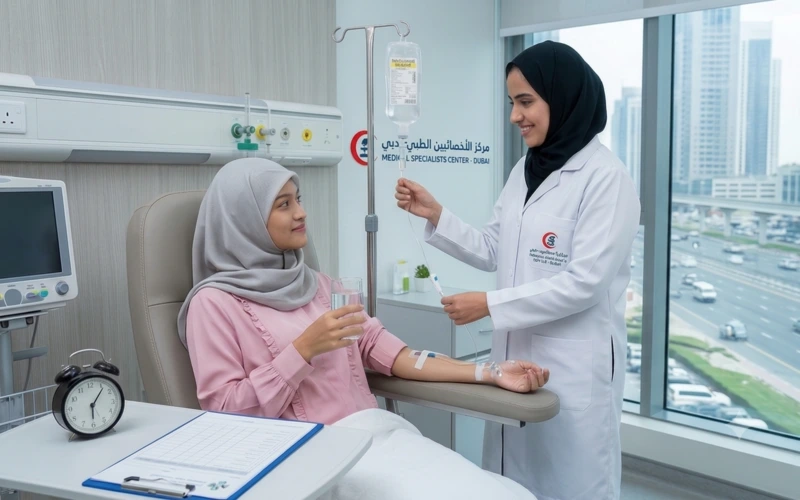
At Medical Specialists Center (MSC Dubai), our medical team helps patients manage dehydration, heat-related illness, and its underlying causes, with rapid rehydration options, including IV drip therapy, available when needed.
If your body has been showing signs of dehydration, don’t wait for it to become serious.
📞 Call us: 04 340 9495
📍 Visit us: Al Barsha Branch, Sheikh Zayed Road, opposite Holiday Inn Hotel, Al Barsha 1, Dubai
Your body knows when something’s off. Learning to recognize the signs early is one of the simplest ways to protect your health in Dubai’s climate.